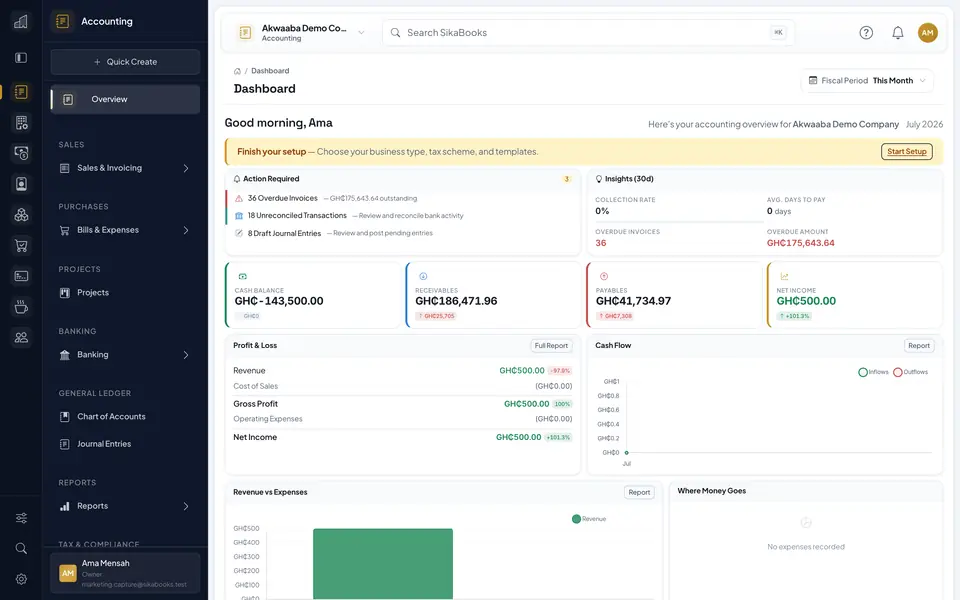
A practical Ghana VAT workflow: configure tax treatment, review transactions, reconcile the ledger, and prepare supporting records for filing.

VAT compliance starts with the right treatment for each supply, not a promise that software can decide every tax question. Confirm your registration status, product tax codes, exemptions, and effective dates with your accountant before issuing invoices.
1. Configure and check the tax treatment
For taxable supplies under Ghana's 2026 VAT reforms, GRA describes VAT at 15%, NHIL at 2.5%, and GETFund at 2.5% on the same taxable value. Other treatments, including exempt and zero-rated supplies, require different handling. Check the current GRA VAT guidance and review the tax setup in SikaBooks Accounting before posting.
2. Review the evidence behind the return
Record sales and supplier bills with the correct dates and tax codes. Reconcile bank and money-account activity, then inspect the VAT and levy reports against invoices, credit notes, and supporting documents. Resolve exceptions before using the figures to prepare a return.
3. File and retain records
SikaBooks helps organize calculations and reports; it does not submit a return or guarantee that a filing is accepted. Your business remains responsible for verifying the numbers, filing through the applicable GRA channel, paying on time, and retaining evidence. The Accounting guide covers the relevant tax and reporting steps.
See the Accounting workflow, or start your free 30-day trial today.