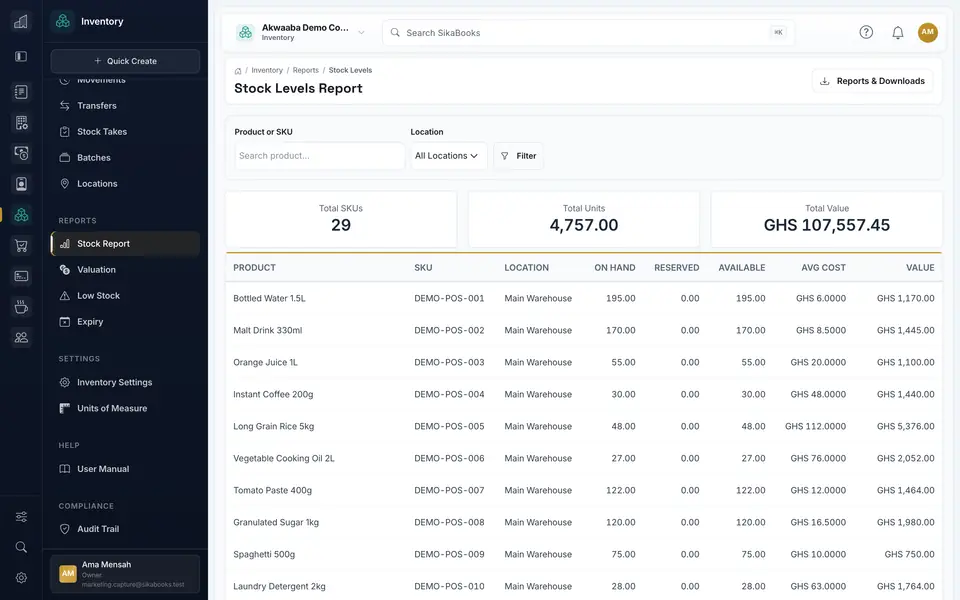
Five practical stock-control habits for Ghanaian retailers, from SKU setup and location counts to reviewed adjustments.

Good stock records start with a repeatable routine. A dashboard can expose a shortage, but it cannot explain a missing carton until someone checks the physical stock and movement history.
1. Give each item a reliable identity
Set a consistent product name, SKU or barcode, unit of measure, and selling location. Record reorder points for products that need monitoring, then review the low-stock report regularly rather than assuming an alert has ordered replacement stock.
2. Record receipts where stock arrives
Check delivered quantities against the source document before receiving. Record batches and expiry dates for products that need them, and keep serials where traceability matters. A received quantity should reflect what was actually counted.
3. Count by location and review variances
Use a stock take or cycle count for a defined location. Compare the system quantity with the physical count, investigate unexpected differences, and approve the adjustment only after review. Do not silently write off a variance.
4. Review demand and value separately
Use sales reports to identify fast-moving products and stock reports to identify quantities and valuation. A high-selling product is not always the highest-value stock holding.
5. Transfer with a clear trail
When moving items between shops or warehouses, record the source, destination, quantities, and receipt. The Inventory guide walks through transfers and stock takes; the Inventory product page shows the wider workflow.